

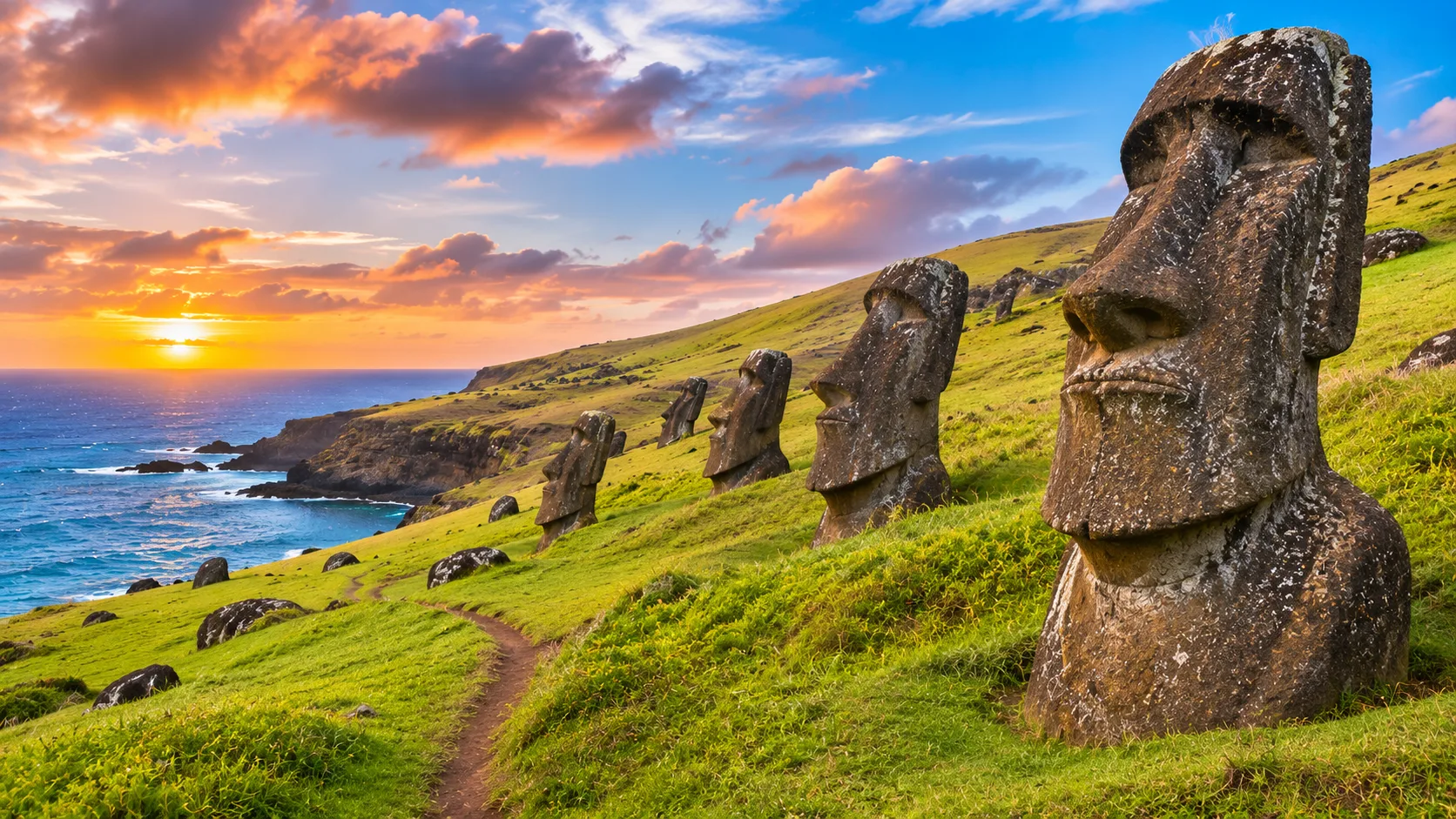
Easter Island is one of the world’s most fascinating travel destinations, famous for its mysterious stone statues, volcanic landscapes, and remote location. Surrounded by the vast Pacific Ocean, this small island attracts travelers interested in history, archaeology, and Polynesian culture. If you are wondering where is Easter Island, it is located in the southeastern Pacific Ocean, approximately 3,500 kilometers west of mainland Chile.
Although Easter Island is geographically part of Polynesia, it belongs politically to Chile in South America. The island is also known as Rapa Nui, the name associated with its Indigenous people and cultural heritage. Its isolated location has helped shape a distinctive history, remarkable traditions, and extraordinary archaeological sites. Today, visitors can explore ancient monuments, volcanic craters, and beautiful coastal scenery.
Traveling to Easter Island requires careful planning because of its distance from major cities and special visitor requirements. Flights, accommodation, transportation, and access to archaeological sites should be arranged in advance. Understanding the island’s location also helps explain why reaching it takes considerable time. This guide covers its geography, map coordinates, famous attractions, cultural importance, and essential travel tips for planning a memorable visit.
Where Is Easter Island Located on the World Map?
Easter Island is located in the southeastern Pacific Ocean, far west of the South American continent. Its approximate geographic coordinates are 27°07′ south latitude and 109°22′ west longitude. These coordinates place the island in the Southern Hemisphere, surrounded by thousands of kilometers of open ocean. On a world map, it appears as a tiny landmass between South America and the central Pacific.
The island belongs to Chile, although it is much closer culturally and geographically to Polynesia than to mainland South America. It forms the southeastern point of the Polynesian Triangle, traditionally connected with Hawaii and New Zealand. This position reflects the extraordinary journeys undertaken by ancient Polynesian navigators. Their settlement of remote islands helped establish communities across the Pacific.
When examining an Easter Island map, look west of Chile and southeast of French Polynesia. The island is not part of the Galápagos Islands, Hawaii, or New Zealand, despite sharing a Pacific setting. Its isolated position makes it one of the most remote inhabited islands. Understanding this location provides useful context for its culture, transportation challenges, and unique natural environment.
Is Easter Island Part of Chile or Polynesia?
Easter Island is politically part of Chile and administratively belongs to the Valparaíso Region. Chile incorporated the island into its territory in 1888, establishing a political relationship that continues today. However, its Indigenous population has a distinct Polynesian heritage. This combination explains why Easter Island is associated with both South American administration and Pacific Island culture.
The Rapa Nui people maintain cultural traditions, language, and historical connections that reflect their Polynesian ancestry. Their ancestors navigated across the Pacific and developed a complex island society. Traditional ceremonies, storytelling, artistic practices, and archaeological monuments remain important parts of local identity. Visitors should recognize that Rapa Nui is a living culture rather than simply an archaeological destination.
Spanish is widely used on the island, while the Rapa Nui language remains an important expression of Indigenous heritage. Cultural preservation continues through community activities, education, and local initiatives. Visitors can support respectful tourism by learning about local customs and following community guidance. Understanding the island’s cultural identity adds meaning to its famous historical landmarks.
How Far Is Easter Island From Mainland Chile?
Easter Island lies approximately 3,500 kilometers, or about 2,175 miles, west of mainland Chile’s coast. The distance from Santiago is roughly 3,700 kilometers by air, depending on the measurement points used. This makes the island significantly farther from Chile’s major cities than many travelers expect. Its location requires a long journey across the Pacific Ocean.
A direct flight from Santiago generally takes around five and a half hours, although flight times vary with weather and operational conditions. The journey crosses a large expanse of ocean with no nearby major international transportation hub. This distance helps explain why travel arrangements require advance planning. Flights and accommodation may also be more expensive than those for mainland Chilean destinations.
The island’s isolation has influenced its history, economy, and everyday life. Many supplies and essential goods must travel considerable distances before reaching the community. Transportation disruptions can therefore affect visitor services and availability. Travelers should allow flexibility in their schedules and avoid assuming that the island offers the same resources as larger tourist destinations.
What Does Easter Island Look Like Geographically?
Easter Island is a relatively small volcanic island covering approximately 164 square kilometers, or 63 square miles. Its shape is roughly triangular, reflecting the volcanic formations that created the landscape. The coastline contains rocky cliffs, exposed shores, and several sandy beaches. Inland areas include rolling grasslands, volcanic hills, and archaeological remains scattered across the terrain.
Three major volcanic structures helped form the island: Terevaka, Poike, and Rano Kau. Terevaka contains the island’s highest point, reaching approximately 500 meters above sea level. Rano Kau is particularly impressive because of its large volcanic crater. These geological features provide beautiful viewpoints and reveal how volcanic activity shaped the island over time.
Unlike tropical destinations covered in dense forests, much of Easter Island features open grassland and low vegetation. Its landscape also includes volcanic rock formations and dramatic ocean views. The surrounding waters are an important part of the island’s natural environment. This combination of volcanic terrain, coastal scenery, and ancient monuments makes Rapa Nui visually distinctive.
Why Is Easter Island Called Rapa Nui?
Rapa Nui is the name closely associated with the island’s Indigenous people, language, and cultural identity. The name is widely used alongside Easter Island in travel information and historical discussions. Many residents and cultural organizations prefer emphasizing Rapa Nui because of its connection to local heritage. Understanding both names helps visitors recognize the island’s different historical perspectives.
The English name Easter Island originated from the arrival of Dutch explorer Jacob Roggeveen on Easter Sunday in 1722. European navigators subsequently used this name when describing the island. However, the Rapa Nui people had established their society long before that encounter. Their history includes centuries of settlement, monument construction, and cultural development.
The island’s names reflect different periods of contact, exploration, and cultural identity. Using Rapa Nui when discussing Indigenous traditions recognizes the people who developed its remarkable heritage. Visitors may also encounter the Spanish name Isla de Pascua. All three names refer to the same island, although their historical meanings and cultural associations differ.
What Is Easter Island Famous For?
Easter Island is best known for its enormous stone statues called moai. These monuments were created by the Rapa Nui people and remain among the most recognizable archaeological sculptures in the world. Many feature large heads, prominent facial features, and carefully shaped bodies. Their construction demonstrates remarkable artistic knowledge, engineering skills, and social organization.
Hundreds of moai are found across the island, with many associated with ceremonial stone platforms called ahu. Researchers generally understand the statues as representations of important ancestors. Their placement reflected cultural beliefs and relationships between communities and ancestral figures. Although scholars continue studying particular details, the monuments provide valuable evidence of Rapa Nui history.
The island is also recognized for its archaeological landscape, volcanic craters, and distinctive cultural traditions. Rapa Nui National Park is a UNESCO World Heritage Site, highlighting its exceptional cultural significance. Visitors can explore selected archaeological locations under established conservation rules. These attractions make the island especially appealing to travelers interested in ancient civilizations and cultural heritage.
Best Places to Visit on Easter Island
Rano Raraku is among the island’s most remarkable archaeological destinations. This volcanic quarry was the principal location where many moai statues were carved. Visitors can see statues in different stages of completion, offering insight into the sculpting process. The surrounding volcanic scenery makes the site particularly memorable for people interested in archaeology and photography.
Ahu Tongariki is another famous attraction, featuring fifteen restored moai standing along a ceremonial platform. Its location near the coastline creates spectacular scenery, especially around sunrise. Anakena Beach provides a contrasting experience with pale sand, palm trees, and turquoise water. The area also contains important archaeological monuments that connect the beach with Rapa Nui history.
Rano Kau and the nearby ceremonial village of Orongo offer additional opportunities to explore the island’s cultural landscape. The volcanic crater provides dramatic views, while Orongo preserves structures associated with historic ceremonial traditions. These attractions have specific visitor rules, including guide requirements at important archaeological sites. Advance planning helps ensure access and a respectful sightseeing experience.
How to Get to Easter Island From Chile
Most travelers reach Easter Island by flying from Santiago, Chile, to Mataveri International Airport near Hanga Roa. The main commercial air connection is operated by LATAM Airlines, subject to current scheduling. The journey generally takes approximately five and a half hours. Travelers arriving internationally usually need to reach Santiago before continuing to the island.
Flights between Santiago and Easter Island are limited compared with routes between major international cities. Availability and schedules may change according to demand and airline operations. Booking well in advance is often sensible, particularly during popular travel periods. Visitors should also check baggage policies and relevant transit requirements before completing their reservations.
Cruise ships occasionally include Easter Island in their Pacific itineraries, although this is not a regular transportation option for most travelers. The island’s remote location makes maritime travel significantly more complicated than flying. For practical vacation planning, air transportation remains the main choice. Confirming flights before booking nonrefundable accommodation helps reduce unnecessary travel disruptions.
Easter Island Entry Requirements for Tourists
Easter Island has special entry requirements designed to manage tourism and protect its local environment. Visitors generally need valid identification or travel documents, a return ticket, and proof of authorized accommodation. International travelers must also meet Chile’s immigration and visa requirements for their nationality. These conditions should be reviewed before making final travel arrangements.
Tourists must complete the Rapa Nui Single Entry Form, known as the FUI, within the required period before departure. Tourist stays are generally limited to 30 days, including arrival and departure days. Accommodation must be registered with Chile’s tourism authority, SERNATUR, unless the traveler qualifies through an approved invitation arrangement. Airline and immigration checks may verify these documents.
Visiting protected archaeological sites also requires attention to national park regulations. Travelers need the appropriate park admission ticket, and access to important sites requires an accredited guide. Some locations may have additional restrictions to protect monuments and the landscape. Because requirements can change, verify current government, airline, and park information before traveling.
Best Time to Visit Easter Island
Easter Island has a mild subtropical climate, making travel possible throughout the year. Temperatures are generally moderate, although rain, wind, and changing weather can occur in any season. The warmer months usually fall between December and March. These conditions can be appealing for visitors interested in beaches, outdoor sightseeing, and cultural activities.
February is particularly significant because the Tapati Rapa Nui festival celebrates local culture through performances, competitions, and community traditions. The festival attracts visitors interested in experiencing the island’s living cultural heritage. However, accommodation and flights may become more difficult to secure during popular periods. Booking early is especially important when planning travel around major celebrations.
The cooler months, generally between June and September, may appeal to visitors who prefer milder temperatures and fewer crowds. Rain and wind can affect sightseeing plans, so flexible scheduling remains useful. Spring and autumn can also offer enjoyable travel conditions. The best season depends on your priorities, whether cultural events, photography, beaches, or quieter exploration.
Where to Stay and How to Explore Easter Island
Hanga Roa is the island’s main town and the center of most visitor services. It contains accommodation, restaurants, shops, transportation providers, and the airport. Staying in Hanga Roa is convenient because many tours and activities begin nearby. Visitors can also enjoy coastal walks and experience aspects of everyday island life.
Accommodation options include hotels, guesthouses, and smaller locally operated properties. Because the island has limited capacity, availability may become restricted during busy periods. Choosing registered accommodation is also necessary for meeting normal tourist entry requirements. Travelers should confirm reservations carefully and consider proximity to restaurants, transportation, and planned activities.
Exploring the island usually involves organized tours, guided excursions, or suitable transportation arranged through local providers. Rental vehicles and bicycles may be available, but accessing major archaeological sites still requires compliance with guide regulations. Some roads pass through exposed countryside and remote areas. Planning transportation around weather, distance, and local rules helps create a more comfortable experience.
Essential Travel Tips for Visiting Easter Island
Careful preparation makes visiting Easter Island easier because the destination is remote and has limited services. Pack comfortable walking shoes, sun protection, lightweight layers, and a reusable water bottle. Weather can change quickly, particularly near exposed coastal areas. Bringing essential personal items can also be helpful because certain products may be expensive or difficult to find locally.
Respecting archaeological sites is one of the most important responsibilities for visitors. Never touch, climb on, or damage moai statues and ceremonial platforms. Remain on designated routes and follow accredited guides’ instructions. Protecting these fragile monuments helps preserve Rapa Nui’s cultural heritage for local communities and future generations.
Visitors should also consider travel insurance, emergency arrangements, and spending needs before departure. Card payments may be available in many establishments, but carrying some Chilean pesos can be useful. Mobile connectivity and internet access may vary across the island. Allow enough time to explore without rushing, and choose locally operated services when practical.
Conclusion
Easter Island, also known as Rapa Nui, is located in the southeastern Pacific Ocean, approximately 3,500 kilometers west of mainland Chile. Although geographically part of Polynesia, it is politically administered by Chile. Its isolated position has influenced its culture, history, and natural environment. The island remains one of the Pacific’s most distinctive destinations.
Travelers visiting Easter Island can explore famous moai statues, volcanic craters, archaeological sites, and beautiful coastal landscapes. Attractions such as Rano Raraku, Ahu Tongariki, Orongo, and Anakena Beach provide memorable experiences. However, reaching the island requires careful preparation. Flights, authorized accommodation, entry documents, and guided archaeological visits should be arranged according to current requirements.
Whether you are interested in ancient history, Polynesian culture, or spectacular ocean scenery, Easter Island offers a remarkable travel experience. Understanding its location and visitor regulations makes planning easier and more responsible. Respect local communities and protected heritage sites throughout your stay. With thoughtful preparation, a journey to Rapa Nui can become an unforgettable Pacific adventure.
Frequently Asked Questions (FAQs)
Where is Easter Island located?
Easter Island is located in the southeastern Pacific Ocean, approximately 3,500 kilometers west of mainland Chile. It belongs to Chile politically but forms part of Polynesia geographically and culturally.
Which country owns Easter Island?
Easter Island belongs to Chile and is administered within the Valparaíso Region. However, the island has a distinct Indigenous Polynesian culture, and the Rapa Nui people maintain their own language and traditions.
How far is Easter Island from Chile?
Easter Island is approximately 3,500 kilometers from mainland Chile’s coast and around 3,700 kilometers from Santiago. A direct flight from Santiago generally takes about five and a half hours.
Why is Easter Island so famous?
Easter Island is famous for its enormous moai stone statues, carved by the Indigenous Rapa Nui people. Its volcanic landscapes, archaeological sites, and extraordinary cultural history also attract international visitors.
Can tourists visit Easter Island?
Yes, tourists can visit Easter Island through approved travel arrangements. Visitors generally need a return ticket, required entry documentation, registered accommodation, and appropriate national park access for protected archaeological attractions.