

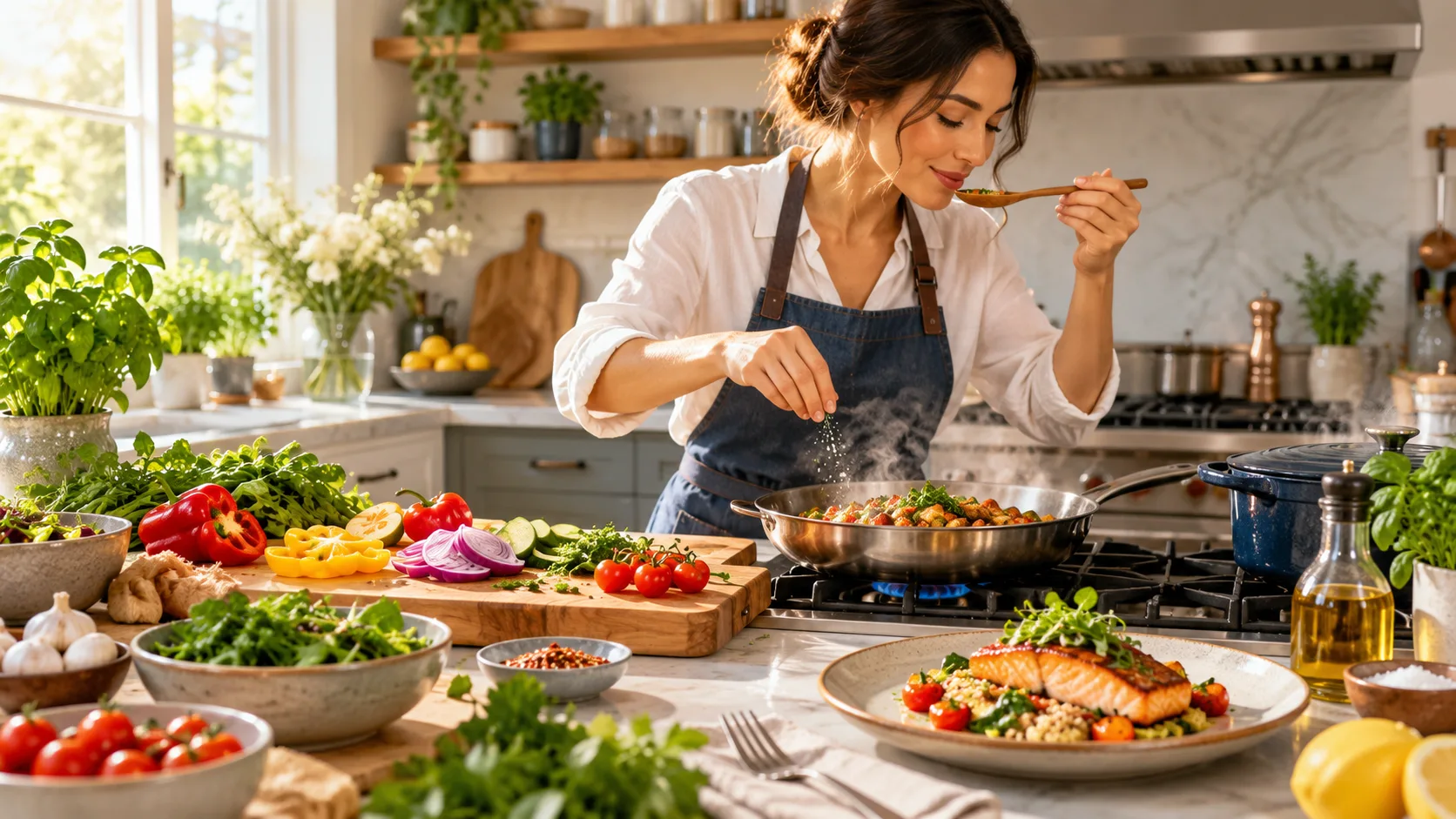
What Are the Five Golden Rules of Cooking?
The five golden rules of cooking are simple principles that help home cooks prepare safer, tastier, and more consistent meals. They include keeping everything clean, preparing ingredients before cooking, controlling heat properly, seasoning and tasting as you go, and paying close attention to timing. Following these basic cooking rules can improve almost any recipe, regardless of your experience level.
Cooking becomes much easier when you understand the principles behind a recipe instead of simply following instructions word for word. Good cooks learn how ingredients react to heat, when flavors need adjustment, and why preparation matters. These habits help prevent common mistakes such as burned food, bland dishes, uneven cooking, contamination, or forgotten ingredients during busy moments in the kitchen.
The golden rules are especially useful for beginners because they create a reliable routine. Once these habits become automatic, cooking feels less stressful and more creative. You can experiment with flavors, ingredients, and techniques while still maintaining a solid foundation that supports food safety, better texture, improved flavor, and more enjoyable meals.
Golden Rule 1: Keep Your Cooking Area Clean
Cleanliness is one of the most important rules of cooking because food safety begins before ingredients reach the pan. Wash your hands thoroughly before handling food and clean work surfaces, cutting boards, knives, and utensils regularly. A clean kitchen reduces the chance of harmful bacteria spreading between raw ingredients, cooked foods, and surfaces that people touch throughout meal preparation.
Raw meat, poultry, seafood, and eggs require particular attention because they can contaminate other foods through direct or indirect contact. Use separate cutting boards when possible and wash tools carefully after handling raw ingredients. Never place cooked food back onto a plate that previously held uncooked meat unless the plate has been thoroughly washed first.
Keeping the kitchen organized also makes cleaning easier while you cook. Wipe spills quickly, place waste in the bin, and wash or soak utensils when you finish using them. Cleaning as you go prevents a large mess from building up and gives you more room to work comfortably, making the entire cooking process safer and more efficient.
Golden Rule 2: Prepare Ingredients Before You Start Cooking
Preparing ingredients before turning on the stove is one of the easiest ways to improve your cooking. Chefs often call this approach mise en place, meaning everything is organized and ready before cooking begins. Measuring spices, chopping vegetables, preparing sauces, and arranging ingredients beforehand helps you focus on the actual cooking process rather than rushing between different tasks.
Some recipes move quickly once heat is applied, especially stir-fries, sauces, omelets, and sautéed dishes. If you begin chopping an onion while garlic is already cooking, the garlic may burn before you finish. Preparing everything first helps prevent these timing problems and allows each ingredient to enter the pan exactly when the recipe requires it.
Preparation also helps you identify missing ingredients before it is too late. Discovering halfway through a recipe that you have no salt, eggs, or cooking oil can be frustrating. Checking ingredients, equipment, and quantities beforehand saves time, reduces mistakes, and makes home cooking feel calmer and more controlled from beginning to end.
Golden Rule 3: Control the Cooking Temperature
Understanding heat is essential because different foods require different cooking temperatures. High heat can create attractive browning on meat and vegetables, while lower heat is often better for gentle simmering, slow cooking, or delicate foods. Using maximum heat for every recipe can cause food to burn outside before the inside has cooked properly.
Preheating pans and ovens can also improve results because food starts cooking at the correct temperature immediately. Placing ingredients in a cold pan when a recipe requires high heat may cause them to release moisture instead of browning. Similarly, baking in an oven that has not reached the required temperature can affect texture, rise, and overall cooking time.
Learning to adjust heat during cooking is just as important as choosing the initial temperature. A sauce may need high heat to reach a boil before being reduced to a gentle simmer. Paying attention to sizzling, bubbling, browning, and aroma will help you recognize when heat should be increased or reduced.
Golden Rule 4: Season and Taste as You Cook
Seasoning is what turns basic ingredients into flavorful food, but good seasoning requires balance rather than simply adding large amounts of salt. Salt, herbs, spices, acids, sweetness, and aromatic ingredients all influence flavor in different ways. Adding seasoning gradually allows flavors to develop while reducing the risk of making a dish overly salty or overpowering.
Tasting your food during appropriate stages of cooking is one of the most valuable habits you can develop. A sauce may need more salt, a soup may benefit from acidity, or a curry may require additional spice. Making small adjustments while cooking is much easier than trying to repair an unbalanced dish immediately before serving.
Remember that some flavors become stronger as food cooks. Sauces and soups can become saltier when liquid evaporates, while spices may become more noticeable after simmering. Season thoughtfully, taste repeatedly when safe to do so, and allow ingredients time to develop before deciding that a dish needs additional seasoning.
Golden Rule 5: Respect Timing and Pay Attention
Good cooking requires attention because even a few extra minutes can significantly change food. Pasta can become soft, vegetables can lose their texture, and meat can dry out when left cooking too long. Using timers can help, but visual signs, aroma, texture, and temperature should also guide your decisions throughout the cooking process.
Different ingredients often need different amounts of cooking time. Hard vegetables such as carrots usually take longer than delicate ingredients such as spinach, while thick pieces of meat require more time than thin pieces. Adding everything to the pan at the same moment can result in some ingredients being overcooked while others remain undercooked.
Avoid becoming heavily distracted once cooking begins, especially when using high heat. Checking your phone, leaving the kitchen, or focusing on several unrelated tasks can quickly lead to burned food. Staying present helps you notice changes immediately and gives you time to stir, turn, reduce heat, or remove food at the right moment.
Why Food Safety Should Always Come First
Food safety is closely connected with the golden rules because even delicious food can become dangerous if handled incorrectly. Ingredients that require refrigeration should not remain at room temperature for extended periods. Store raw foods properly, check freshness, and follow appropriate cooking practices to reduce the risk of foodborne illness.
Cooking certain foods thoroughly is especially important. Meat, poultry, seafood, and eggs should reach safe levels of doneness rather than being judged only by exterior appearance. A food thermometer can be a useful kitchen tool because it provides a more reliable way to check internal temperature, especially when preparing large pieces of meat.
Safe storage after cooking matters as well. Leftovers should be cooled and refrigerated appropriately instead of remaining on the counter for long periods. When reheating food, make sure it becomes properly hot throughout, and discard anything that smells unusual, appears spoiled, or has been stored beyond a reasonable period.
Use the Right Cooking Method for Each Ingredient
Different ingredients respond better to different cooking techniques, so choosing the appropriate method can dramatically improve results. Roasting can enhance vegetables through browning, steaming helps preserve delicate textures, and slow cooking can soften tougher cuts of meat. Understanding these differences helps you get the best flavor and texture from each ingredient.
Moist cooking methods such as boiling, steaming, braising, and poaching are useful when tenderness and gentle heat are important. Dry heat methods such as roasting, grilling, frying, and baking often create browning and stronger roasted flavors. Neither approach is automatically better because the correct method depends on the ingredient and the result you want.
You can also combine cooking techniques to create more complex dishes. Meat may be browned first and then slowly braised, while vegetables may be blanched before being quickly sautéed. Learning when to use each method builds confidence and makes it easier to adapt recipes based on the ingredients available in your kitchen.
Avoid Overcrowding the Pan
Putting too much food into one pan is a common mistake that can prevent proper browning. When ingredients are packed closely together, they release moisture that becomes trapped as steam. Instead of developing a golden exterior, vegetables and meat may become soft, pale, and watery even when the pan is relatively hot.
Cooking in smaller batches often produces better results. Giving ingredients enough space allows moisture to escape and keeps the cooking surface hot. This is especially helpful when browning mushrooms, roasting vegetables, searing meat, or preparing stir-fried dishes where texture and caramelization are important parts of the final flavor.
Although batch cooking may take a little longer, the improvement in texture is usually worth the extra time. Once each batch is properly browned, everything can be combined again if the recipe requires it. This simple technique can make home-cooked meals look and taste noticeably more professional without requiring expensive equipment.
Choose and Maintain the Right Kitchen Tools
Good cooking does not require a kitchen filled with expensive equipment, but a few reliable tools make preparation much easier. A sharp chef’s knife, sturdy cutting board, dependable pans, measuring tools, mixing bowls, and cooking utensils can handle most everyday recipes. Choosing practical equipment is more valuable than buying specialized tools that rarely get used.
Keeping knives sharp is particularly important because dull blades often require more force and can slip while cutting. Sharp knives make slicing vegetables, meat, herbs, and fruit faster and more precise. Properly maintained pans also perform better, while damaged nonstick cookware or warped baking trays may produce inconsistent results.
Use each tool for its intended purpose whenever possible. A heavy skillet works well for searing, while a saucepan is better suited to soups and sauces. Understanding how different cookware distributes heat helps you choose the best option and gives you greater control over texture, browning, moisture, and overall cooking performance.
Learn to Balance Flavors
A delicious dish often contains a balance of salty, sweet, sour, bitter, savory, and sometimes spicy elements. Not every meal needs all of these flavors equally, but understanding how they interact can help you fix dishes that taste incomplete. For example, a rich sauce may become brighter with a small amount of lemon juice or vinegar.
When food tastes flat, people often assume it needs more salt, but the problem may actually be a lack of acidity or aroma. Fresh herbs, citrus juice, spices, garlic, ginger, or vinegar can sometimes bring a dish to life without increasing saltiness. Learning to identify what is missing makes seasoning more thoughtful and effective.
Balance also depends on personal preference and cuisine. Some dishes are naturally spicy and tangy, while others are mild and creamy. Instead of forcing every recipe into the same flavor profile, taste carefully and understand what the dish is supposed to achieve before making adjustments during the cooking process.
Read the Entire Recipe Before Starting
Reading a recipe from beginning to end is a simple habit that prevents many avoidable mistakes. You may discover that an ingredient needs to marinate for an hour, dough requires resting time, or the oven must be preheated in advance. Knowing these details before starting makes it easier to plan the entire cooking process.
Pay attention to instructions that affect ingredient preparation. A recipe asking for one cup of chopped onions may require a different amount than one cup of whole onions that are chopped afterward. Small wording differences can affect measurements, texture, cooking time, and the final outcome, especially in baking where accuracy can be particularly important.
Reading first also helps you understand the sequence of steps. You can identify moments when several tasks happen quickly and prepare for them in advance. This habit reduces unnecessary stress and allows you to cook with greater confidence because you already know what is coming next rather than discovering each instruction at the last moment.
Practice and Learn From Cooking Mistakes
No cook produces perfect food every time, especially when learning new techniques. Burned onions, overly salty soup, dry chicken, or undercooked vegetables can all teach useful lessons. Instead of viewing mistakes as failure, consider what caused the problem and how changing temperature, timing, seasoning, or preparation could improve the next attempt.
Repeating recipes is one of the best ways to develop cooking intuition. The first attempt teaches you the basic method, while later attempts allow you to improve flavor, texture, and timing. Over time, you begin recognizing when dough feels correct, when vegetables are properly browned, or when a sauce has reached the right consistency without constantly checking instructions.
Confidence grows through regular practice rather than memorizing hundreds of recipes. Once you understand core techniques and the five golden rules of cooking, adapting meals becomes much easier. You can substitute ingredients, adjust portions, create new combinations, and solve small kitchen problems because you understand why each step matters.
Conclusion
The five golden rules of cooking are keeping your kitchen clean, preparing ingredients before starting, controlling temperature, seasoning and tasting carefully, and respecting cooking time. These simple principles create a strong foundation for safer, more organized, and better-tasting meals. They are useful whether you are preparing a simple breakfast or a complicated dinner.
Great cooking also involves understanding ingredients, choosing suitable cooking methods, using reliable tools, and maintaining good food safety habits. Reading recipes carefully and paying attention during cooking can prevent many common mistakes. As these techniques become familiar, you will rely less on strict instructions and become more comfortable making adjustments based on taste and experience.
Most importantly, becoming a better cook takes practice. Mistakes are normal and often provide useful lessons about heat, timing, seasoning, and preparation. By applying the five golden cooking rules consistently and continuing to experiment, you can develop stronger kitchen skills and prepare meals that are safer, more flavorful, and more enjoyable.
Frequently Asked Questions
What are the five golden rules of cooking?
The five golden rules are maintaining cleanliness, preparing ingredients before cooking, controlling heat, seasoning and tasting as you go, and paying close attention to cooking time and doneness.
Why is preparation important before cooking?
Preparation keeps the cooking process organized and prevents ingredients from burning while you chop or measure something else. Having everything ready also helps you notice missing ingredients before cooking begins.
Why is temperature control important in cooking?
Proper temperature helps food cook evenly and develop the desired texture. Excessive heat may burn the outside before the inside cooks, while heat that is too low may prevent proper browning.
Should you taste food while cooking?
Yes, tasting allows you to adjust salt, spices, acidity, and other flavors before serving. Only taste foods when it is safe to do so, particularly when recipes contain raw meat or eggs.
What is the most important cooking rule for beginners?
All five rules matter, but preparation is especially helpful for beginners. Organizing ingredients and equipment before cooking reduces stress, improves timing, and makes it easier to focus on heat, seasoning, and technique.