

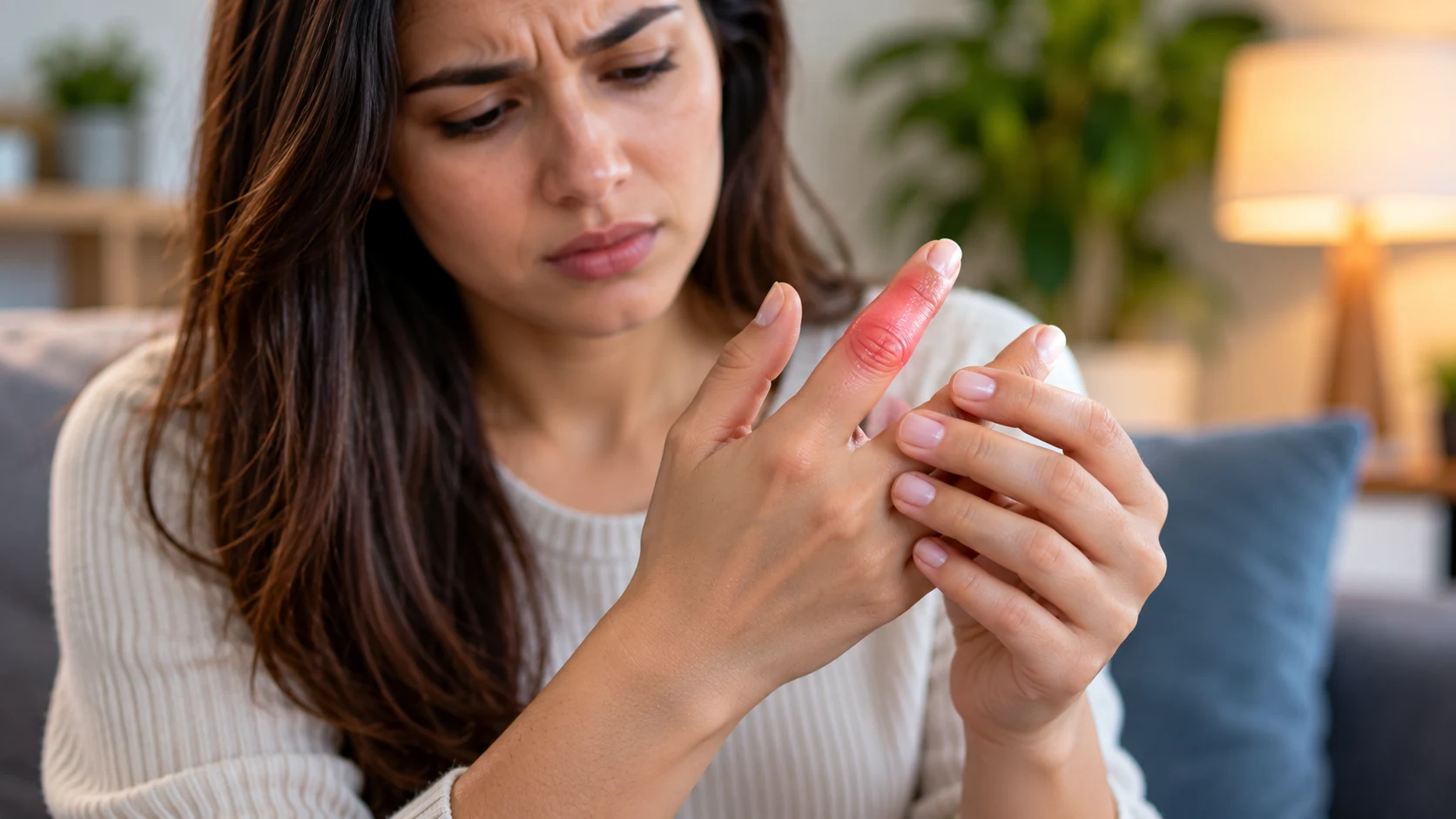
Why Is My Finger Swollen?
A swollen finger can happen for many reasons, from a minor injury to an infection or an underlying health condition. You may notice puffiness around one joint, swelling across the entire finger, or stiffness that makes bending difficult. The cause often becomes clearer when you consider pain, redness, warmth, injury, and other symptoms.
Sometimes finger swelling appears suddenly after hitting, twisting, or overusing the hand. In other cases, there may be no obvious trigger, which can make the swelling more concerning. Paying attention to how quickly it developed and whether other fingers are affected can help narrow down possible causes.
Most mild swelling improves as the underlying irritation settles. However, severe pain, significant redness, warmth, pus, numbness, color changes, or difficulty moving the finger may require medical attention. Knowing the common causes can help you decide what steps to take next.
Common Causes of a Swollen Finger
Injuries are among the most common reasons for finger swelling. A jammed finger, sprain, bruise, or small fracture can cause inflammation around the affected tissues. Swelling may appear within minutes or gradually become more noticeable over several hours after the injury.
Infections can also cause a swollen finger, especially when bacteria enter through a cut, hangnail, puncture, or damaged skin. An infected finger may become red, warm, tender, and increasingly painful. Pus or drainage can sometimes develop near the nail or beneath the skin.
Other causes include arthritis, insect bites, allergic reactions, fluid buildup, and tendon irritation. Some conditions affect only one finger, while others can cause swelling in several joints. The location, appearance, and accompanying symptoms can help distinguish between these possibilities.
Finger Swelling After an Injury
A swollen finger after an injury may result from a sprain, bruise, dislocation, or fracture. The tissues around the finger can become inflamed after sudden force or excessive bending. Pain and tenderness are common, especially when trying to grip something or move the affected joint.
A jammed finger often occurs when the fingertip is pushed backward or struck forcefully. The middle or end joint may swell and become difficult to bend or straighten. Bruising can also develop, and the finger may feel stiff for several days as the injured tissues recover.
If the finger looks crooked, feels unstable, or cannot move normally after an injury, medical assessment is important. Severe swelling or pain can sometimes accompany a fracture or dislocation. Avoid forcing the finger back into position because this can worsen tissue damage.
Arthritis and Swollen Finger Joints
Arthritis can cause swelling, stiffness, tenderness, and reduced movement in the fingers. Osteoarthritis often affects joints that experience repeated use and may become more noticeable with age. Rheumatoid arthritis can affect several joints and may cause prolonged morning stiffness and swelling.
Some forms of arthritis can make a finger joint look puffy or enlarged. Symptoms may fluctuate, with periods when swelling and discomfort become more noticeable. Stiffness after periods of inactivity can also occur, particularly when several joints are involved.
Recurring finger swelling without an obvious injury deserves medical evaluation. A healthcare professional can assess the affected joints and consider your overall symptoms. Identifying the type of arthritis matters because treatment approaches can differ depending on the underlying condition.
Finger Infection and Swelling
A finger infection can develop when bacteria enter through broken skin, a cuticle injury, bite, splinter, or small wound. The affected area may become red, swollen, warm, and painful to touch. In some cases, swelling begins around the fingernail and gradually spreads into nearby tissue.
An infection near the nail is sometimes called a nail-fold infection. Another type can develop deeper in the fingertip and cause intense throbbing pain and swelling. These infections may require medical treatment, particularly when symptoms are worsening rather than improving.
Do not ignore rapidly increasing redness, warmth, swelling, or pain. Pus, red streaks moving up the hand, fever, or feeling generally unwell can indicate a more serious infection. Prompt medical care is especially important when an infection appears to be spreading.
Why Is My Finger Swollen Around the Nail?
Swelling around the nail may develop after biting nails, trimming cuticles too closely, picking at the skin, or sustaining a small injury. Even a tiny break in the skin can allow bacteria to enter. The area may become tender before noticeable redness or swelling appears.
A swollen nail fold can sometimes contain pus beneath the skin. Pain may become more intense when pressure is applied around the nail. Keeping the area clean and avoiding further picking or cutting can reduce additional irritation while you monitor mild symptoms.
If swelling becomes severe or a pocket of pus develops, medical treatment may be necessary. Do not attempt to puncture or cut into the swollen area yourself. Persistent or worsening symptoms should be assessed by a healthcare professional to prevent the infection from spreading.
Swollen Finger Without Injury
A swollen finger without an obvious injury can have several possible explanations. Arthritis, infection, insect bites, allergic reactions, tendon irritation, and fluid retention can all cause swelling. Sometimes a minor injury occurred without being noticed, especially after repetitive hand use.
Pay attention to whether the swelling affects one finger or several. One swollen finger may point toward a localized problem, while swelling in multiple joints can sometimes be associated with inflammatory conditions. Pain, stiffness, redness, warmth, and skin changes can provide additional clues.
Sudden unexplained swelling should not automatically be assumed to be harmless. If the finger is painful, hot, very red, difficult to move, or changing color, medical assessment may be appropriate. Recurring swelling without an obvious trigger also deserves professional attention.
Finger Swelling From Repetitive Use
Repeated gripping, typing, lifting, playing an instrument, or using hand tools can irritate muscles, tendons, and joints. The resulting inflammation may cause mild swelling and stiffness. Symptoms often become more noticeable after prolonged activity and may improve after resting the hand.
Tendon irritation can make certain finger movements uncomfortable. You may notice pain when bending or straightening the finger, gripping objects, or making a fist. Some people also experience clicking, catching, or a sensation that the finger does not move smoothly.
Reducing the activity that triggers symptoms can give irritated tissues time to settle. Gentle movement may help prevent stiffness, but painful movements should not be forced. If swelling continues despite reducing repetitive activity, a healthcare professional can assess the hand and determine the likely source.
Insect Bites and Allergic Reactions
An insect bite can cause localized swelling around a finger, especially when the skin reacts strongly to the bite. The area may feel itchy, warm, or mildly painful. A small raised mark or puncture point may also be visible near the center of the swelling.
Contact with certain substances can trigger skin irritation or an allergic reaction. Soaps, cleaning products, cosmetics, metals, plants, and other materials may irritate sensitive skin around the fingers. Swelling may appear alongside itching, redness, dryness, or small skin bumps.
Mild localized reactions often improve after the irritating substance is avoided. However, swelling involving the lips, tongue, throat, or face can signal a serious allergic reaction and requires emergency medical care. Breathing difficulty, dizziness, or widespread hives are also urgent warning signs.
How to Reduce Mild Finger Swelling at Home
For mild swelling after a minor injury, resting the affected finger can help reduce irritation. Keeping the hand elevated above heart level for periods of time may also help limit fluid buildup. Avoid activities that increase pain or place heavy pressure on the swollen area.
A cold pack wrapped in a thin cloth may help during the early period after a minor injury. Use it for short periods rather than applying ice directly to the skin. If swelling is related to repetitive use rather than an acute injury, reducing the aggravating activity may be more helpful.
Do not tightly wrap or immobilize a swollen finger unless a healthcare professional recommends it. Excessive pressure can affect circulation and increase discomfort. If the finger becomes numb, pale, blue, increasingly painful, or unusually cold, remove restrictive material and seek medical attention.
When Is a Swollen Finger an Emergency?
Some forms of finger swelling require urgent assessment. Severe pain, major swelling, an obvious deformity, loss of movement, or a finger that appears blue or unusually pale can indicate a significant injury or circulation problem. These symptoms should not be managed solely at home.
An infection can also become urgent when redness and swelling spread quickly. Fever, chills, pus, red streaks extending toward the hand or arm, or rapidly worsening pain can indicate that the infection is becoming more serious. Early medical treatment can help prevent complications.
A serious allergic reaction is another emergency. Finger swelling accompanied by swelling of the mouth or throat, trouble breathing, faintness, or widespread hives requires immediate emergency care. When severe symptoms appear suddenly, seek emergency medical assistance rather than waiting for them to resolve.
When Should You See a Doctor for a Swollen Finger?
A healthcare professional should evaluate swelling that does not improve, repeatedly returns, or has no clear explanation. This is especially important when the finger remains painful or stiff for an extended period. Recurring swelling may point toward arthritis, tendon problems, infection, or another underlying condition.
Medical assessment is also important after an injury if you cannot move the finger normally. A fracture or dislocation may not always be obvious from appearance alone. Persistent tenderness, significant bruising, deformity, or instability can justify an examination and possible imaging.
You should also seek care when swelling occurs with redness, warmth, pus, fever, or increasing pain. These features can indicate infection. Getting treatment early may reduce the chance of the problem spreading into deeper tissues around the finger or hand.
How a Doctor Diagnoses a Swollen Finger
A clinician will usually ask when the swelling started and whether anything happened before it appeared. They may ask about injuries, repetitive activities, bites, cuts, recent illness, joint stiffness, and other affected areas. Your symptoms and medical history can help narrow down the likely cause.
The finger and surrounding hand may be examined for tenderness, warmth, redness, movement, swelling, deformity, and skin changes. The clinician may also assess circulation and sensation. If arthritis or another joint condition is suspected, other joints may be examined as well.
Further testing depends on the suspected cause. An X-ray may be used after certain injuries, while blood tests can sometimes help investigate inflammatory conditions. If infection is suspected, the treatment decision may depend on the appearance, severity, location, and progression of the affected area.
How to Prevent Finger Swelling
Protecting your hands during activities can reduce the chance of injuries that lead to swelling. Use appropriate technique when lifting, playing sports, or handling tools, and avoid forcing a joint beyond its comfortable range. Gradually increasing activity can also reduce unnecessary strain.
Good hand and nail care can help reduce infection risk. Avoid biting your nails or tearing hangnails because these habits can damage the skin around the nail. Clean minor cuts with appropriate care and keep damaged skin protected while it heals.
If repetitive hand movements cause recurring swelling, take regular breaks and change positions when possible. Gentle hand and finger movements can help maintain mobility without placing excessive stress on irritated tissues. Persistent symptoms should be assessed rather than repeatedly ignored.
What Does Finger Swelling Say About Your Health?
The pattern of swelling can sometimes reveal useful information about the underlying problem. Swelling after trauma points toward an injury, while redness and warmth may suggest inflammation or infection. Several swollen joints may raise the possibility of an inflammatory joint condition.
The duration also matters. Swelling that appears briefly after heavy hand use may settle with rest, while persistent swelling deserves closer attention. Changes in skin color, sensation, temperature, or finger movement are particularly important because they can indicate problems beyond simple inflammation.
There is no single explanation for every swollen finger. The combination of symptoms matters more than swelling alone. If you cannot identify a reasonable cause or the problem keeps returning, professional evaluation can help determine what is happening and whether treatment is needed.
Conclusion
A swollen finger can result from a minor injury, repetitive strain, arthritis, infection, insect bite, allergic reaction, or another condition. Looking at the timing, location, severity, and accompanying symptoms can help you understand what may be behind the swelling. Mild symptoms often improve when the affected hand receives appropriate rest and care.
However, significant swelling should not always be treated as a simple injury. Severe pain, deformity, numbness, unusual color changes, rapidly spreading redness, pus, fever, or difficulty moving the finger may require medical attention. Sudden swelling with breathing difficulty or swelling of the mouth and throat requires emergency care.
If your finger remains swollen without a clear reason, keeps becoming swollen, or interferes with everyday movement, speak with a healthcare professional. Early evaluation can help identify the underlying cause and prevent a minor problem from becoming more complicated. Pay attention to changes rather than ignoring persistent or worsening symptoms.
FAQs
Why is my finger swollen for no reason?
A swollen finger without an obvious injury may be related to arthritis, infection, repetitive strain, an insect bite, an allergic reaction, or an unnoticed minor injury. Persistent unexplained swelling should be medically assessed.
How do I reduce swelling in my finger?
For mild injury-related swelling, rest the finger, keep the hand elevated, and use a wrapped cold pack for short periods. Avoid activities that increase pain or swelling until symptoms improve.
Should I worry about a swollen finger?
Mild swelling after a known minor injury is often not serious. Seek medical care for severe pain, deformity, numbness, major redness, pus, fever, color changes, or rapidly worsening swelling.
Can arthritis cause a swollen finger?
Yes. Arthritis can cause finger joint swelling, stiffness, tenderness, and reduced movement. Some forms affect one or more joints and may cause symptoms that repeatedly flare and settle.
Why is my finger swollen and painful around the nail?
Painful swelling around the nail can result from irritation or an infection after a cuticle injury, nail biting, or damaged skin. Increasing redness, warmth, pus, or worsening pain should be assessed by a healthcare professional.